
Child Carrier Guide & FAQs
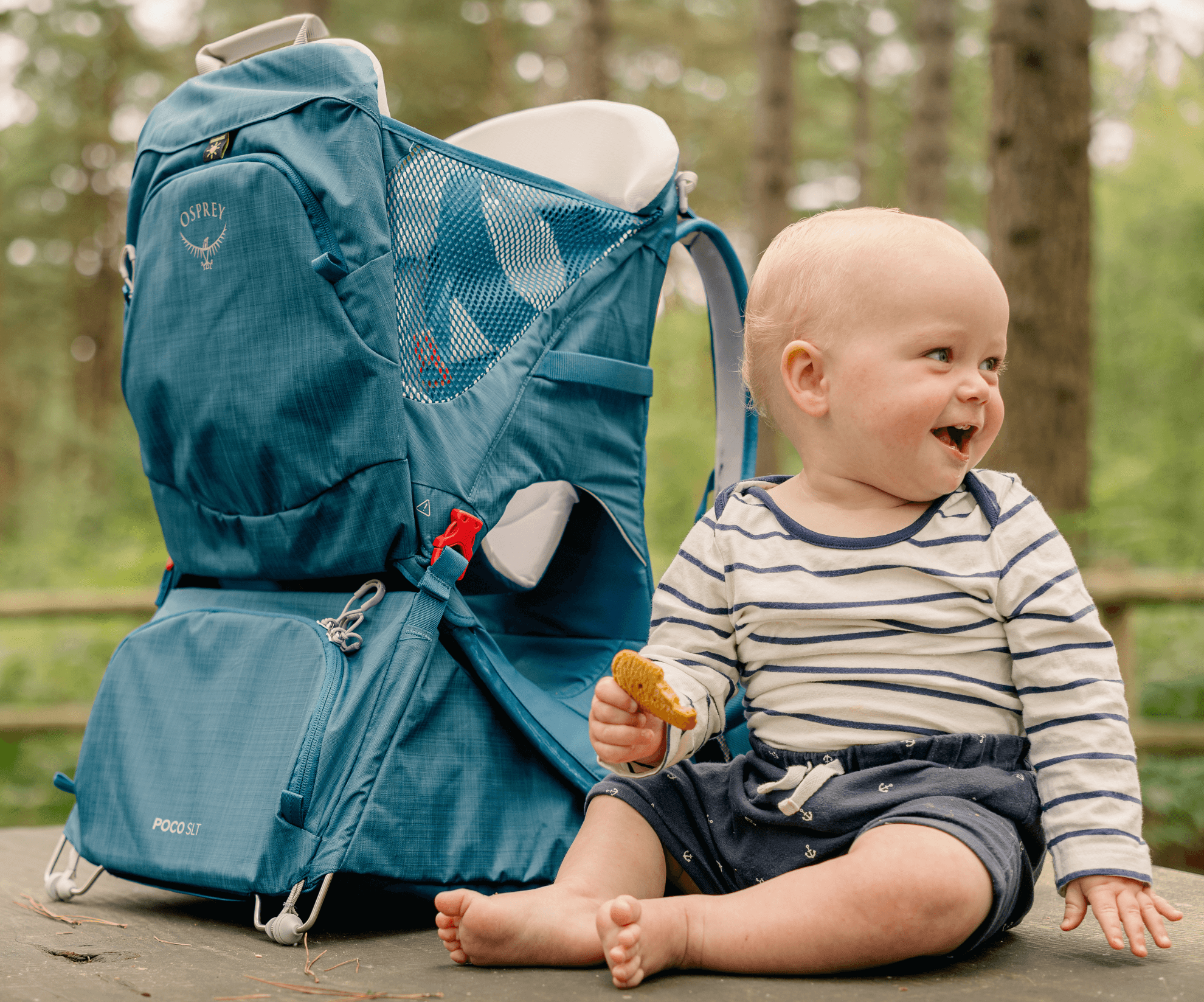
A child carrier can open up a whole new world of family adventures. From woodland walks and countryside trails to holidays, festivals and days out, a good carrier lets little trekkers come along for the journey even when their legs need a rest.
But choosing a child carrier can feel a little overwhelming. What age can your child use one? How important is the fit? Do you need a sunshade or rain cover? And what's the difference between all those different models?
We've put together this guide to help you find the answers and choose a carrier that works for you, your child and the adventures you have planned.
CHOOSING A CHILD CARRIER: WHERE DO I START?
There isn't one child carrier that's perfect for every family.
Think about where you'll use it, how often you'll use it, who will carry it and how old and heavy your child is. A carrier for occasional trips around the park might have very different requirements from one that's going to be used for long countryside walks.
When comparing carriers, consider:
-
Fit and comfort for the adult – a good hip belt and adjustable back system can make a big difference.
-
Comfort and support for your child – look for a secure harness, supportive seat and adjustable features where available.
-
Weight – remember that the biggest part of the load will be your child, so don't choose a carrier based on its own weight alone.
-
Storage – think about how much space you'll need for nappies, snacks, spare layers, drinks and other essentials.
-
Accessories – sunshades, rain covers and other accessories can make your carrier much more versatile.
-
Your adventures – shorter walks, everyday use and longer hikes may all call for slightly different features.
The best carrier is the one that fits your needs and feels comfortable for both you and your little trekker.
FRONT OR BACK CARRIERS - WHAT'S THE DIFFERENCE?
Front carriers are designed to keep your baby close to you and are often suitable from a much younger age, depending on the individual carrier.
Backpack-style child carriers are designed for older babies and children who meet the manufacturer's developmental requirements. They give you greater freedom of movement and are particularly useful for walks, hikes and longer days outdoors.
If you're moving from a front carrier to a backpack carrier, don't rely on age alone. Always check the specific carrier's minimum age, weight and developmental requirements before use.
WHEN CAN MY CHILD START TO TRAVEL IN A BACK CARRIER?
This is one of the most important questions – and there isn't one age that applies to every carrier.
Different manufacturers and models have different requirements.
Always check the product information for your chosen carrier before using it.
Your child's ability to sit independently, head and trunk control, weight and the manufacturer's instructions are all important considerations.
WHAT MAKES A GOOD CHILD CARRIER?
The carrier needs to be comfortable for two people, so don't just think about your child's comfort.
For the adult
Look for:
-
A supportive, well-padded hip belt
-
Adjustable shoulder straps
-
An adjustable back system where available
-
A secure, comfortable fit
-
Good weight distribution
A well-fitted carrier should allow the weight to sit comfortably around your hips rather than leaving your shoulders doing all the work.
For your child
Look for:
-
A secure safety harness
-
A supportive, comfortable seat
-
Adjustable features that allow the carrier to grow with your child
-
Footrests or foot loops where supplied
-
Good head and neck support
-
Protection from the weather when needed
Features vary between models, so always check exactly what is included with the carrier you're considering.
DOES THE CARRIER NEED TO BE FREESTANDING?
It's largely a matter of preference.
A freestanding carrier has a built-in stand that allows it to sit upright when you're putting your child in or taking them out. This can be particularly handy when you're getting used to using a carrier.
A non-freestanding carrier can still be perfectly practical, but you'll need to follow the manufacturer's instructions for safely loading and unloading your child.
Whichever style you choose, never leave your child unattended in a carrier and don't place a carrier containing a child on a raised or unstable surface.
WILL A HEAVIER CARRIER BE UNCOMFORTABLE?
Not necessarily.
It's easy to assume that the lightest carrier will automatically feel best, but once your child is sitting in it, the weight of the carrier itself becomes a relatively small part of the overall load.
A slightly heavier carrier with a well-designed suspension and harness system can feel more comfortable than a very lightweight carrier with less support.
Think about how the carrier carries the weight, not just how much the carrier weighs.
If you're new to child carriers, start with shorter walks and gradually build up as you and your child get used to it.
HOW MUCH STORAGE DO I NEED?
Think about what you normally take on a family adventure.
You'll probably want space for things like:
-
Spare clothing
-
Waterproofs
-
Nappies and wipes
-
Snacks
-
Drinks
-
Sun protection
-
Small toys or distractions
Some carriers have generous integrated storage, while others are more streamlined. Some models also offer removable or additional storage options.
Don't forget that everything you put in the carrier adds to the load you're carrying, so pack the essentials and leave the kitchen sink at home!
WHAT CHILD CARRIER ACCESSORIES DO I NEED?
Accessories can make a carrier much more useful throughout the year.
Sunshades
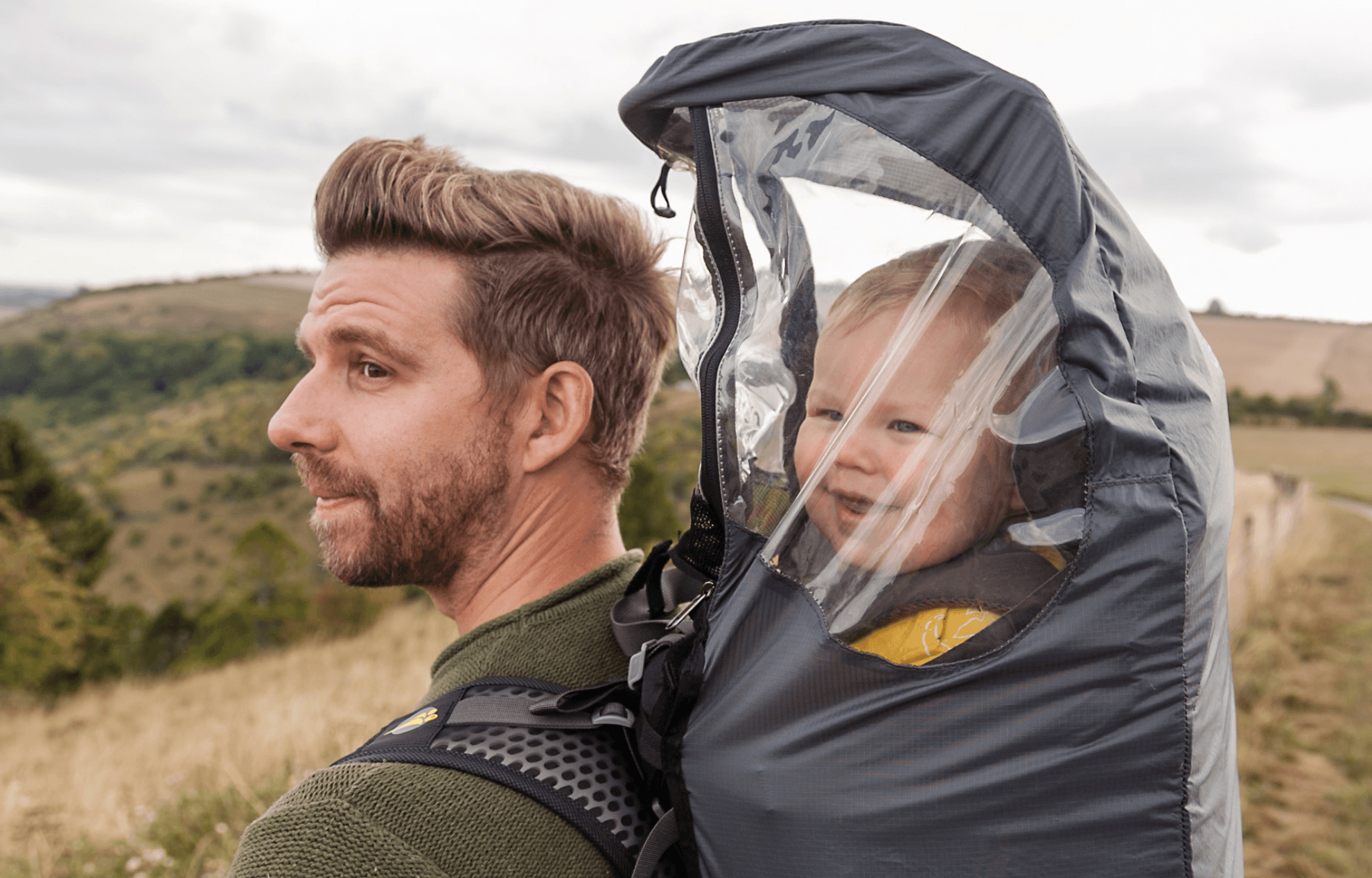
A sunshade can provide extra protection from the sun on brighter days. Some carriers include one, while others have a compatible shade available separately.
Rain covers
A rain cover is particularly useful if you plan to use your carrier in the UK's famously changeable weather. It can help keep your little passenger and parts of the carrier protected when the rain arrives.
Neck and head supports
Some carriers offer additional support for children who fall asleep during walks. Whether you need one depends on the carrier, your child's age and how they sit in the carrier.
Footrests and stirrups
Many backpack carriers include adjustable footrests or loops. These can give your child somewhere comfortable to rest their feet and help them maintain a more natural seated position.
Always check compatibility before buying an accessory – not every accessory fits every carrier.
SHOP CHILD CARRIER ACCESSORIES
CAN TWO PARENTS SHARE THE SAME CARRIER?
Absolutely – but adjustability is key.
If more than one adult will be carrying your child, look for a carrier with an adjustable back length and harness system that can be easily adapted between wearers.
Kelty, Osprey & deuter all have good back adjustment features, designed to adjust between different adult body shapes. Also, the Opsrey Poco SLT and the deuter Kid Comfort Active SL are designed to be more slimline is design. Perfect for female or slimmer male body shapes.
If you're planning to share a carrier, it's worth trying it on both adults before deciding if it is the one.
HOW LONG WILL MY CHILD FIT IN A CHILD CARRIER?
This varies between models, so there isn't a single age at which every child should stop using a carrier.
Check the manufacturer's maximum child weight and any other stated limits for your particular carrier.
As children get older, they may also naturally want to walk for more of the journey.
That's one of the great things about a child carrier – it can give you flexibility to let little legs explore while still having a comfortable back-up for when they run out of steam.
CAN I USE A CHILD CARRIER ALL YEAR ROUND?
Yes!
A child carrier doesn't need to go into storage when summer ends.
With the right clothing and accessories, carriers can be brilliant for autumn and winter walks too. Dress your child in comfortable layers rather than bulky clothing, and use a compatible rain cover or sunshade when appropriate.
Remember that your child is sitting close to your back, so they'll experience the weather differently from you. Check them regularly and adjust their layers as conditions change.
READ OUR GUIDE TO USING YOUR CHILD CARRIER ALL YEAR ROUND
WHAT SHOULD MY CHILD WEAR IN A CARRIER?
Think layers rather than bulk.
A carrier's harness needs to sit securely and comfortably, so avoid piling on thick, bulky clothing underneath the straps.
For colder days, several thinner layers are often more practical than one very thick layer. On warmer days, breathable clothing and sun protection are important.
And don't forget those little extras – a hat, waterproof layer or warm socks can make a surprisingly big difference when you're spending several hours outdoors.
HOW DO I KNOW WHICH CHILD CARRIER IS RIGHT FOR ME?
Start by asking yourself a few simple questions:
Where will I use it?
Everyday walks, holidays, woodland adventures or longer hikes?
How old and heavy is my child?
Check the individual carrier's minimum and maximum requirements.
Who will carry it?
If you're sharing, look for plenty of adult adjustment.
How much will I carry?
Think about your child plus snacks, spare layers and everything else you'll need.
What weather will I use it in?
Check whether a sunshade or rain cover is included or available separately.
How often will I use it?
For occasional shorter trips, a lightweight, straightforward model may suit you. For longer or more frequent adventures, comfort and support become increasingly important.
STILL NOT SURE?
That's where we can help.
We've been helping families choose outdoor kit for years, and child carriers are no exception. We know that the carrier that's perfect for one family might not be right for another.
Take a look at our child carrier collection, compare the specifications and features, and if you're still unsure, get in touch with the Little Trekkers team.
We're happy to help you find a carrier that suits your child, your adventures and the way your family gets outdoors.
TRY YOUR CARRIER AT HOME
Choosing a child carrier is a very personal decision, and it's important that both you and your child are comfortable with your choice.
At Little Trekkers, we only stock carriers that we believe are good quality and up to the job they're designed for. But we also understand that sometimes you won't know whether a carrier is right for you until you've had a chance to try it.
That's why we recommend trying your new carrier at home as soon as it arrives.
You can carefully try it on, adjust the straps and harness, and see how it feels with your child in place – just as you would in a shop. In fact, trying it at home can be even easier, as you can choose a time when your little one is happy and settled, and take your time getting everything adjusted.
If you decide the carrier isn't right for you, you can return it to us provided it is in original new condition, with all labels attached and in a re-saleable condition. We'll provide a full refund of the product cost, although return postage is not refundable.
READ OUR FULL RETURN INFORMATION HERE
A final word on safety
Child carriers are designed and tested according to the manufacturer's specifications, so always read the instructions supplied with your carrier before use.
Pay particular attention to the manufacturer's minimum age, weight limits, harness adjustment and instructions for loading, unloading and using the carrier's stand.
Never leave a child unattended in a carrier and always make sure the harness is correctly fastened and adjusted.
If in doubt, check the instructions for your specific carrier or contact the manufacturer.
This guide is intended as general information to help you choose a child carrier. Product specifications and recommendations can vary between manufacturers and models, so always follow the instructions supplied with your individual carrier.